Thursday, 24 July 2014

The War Stone: Birmingham's Jewellery Quarter

The War Stone
I went to visit the War Stone today in Birmingham's Jewellery Quarter. I was taking photos for an article I will be writing soon for Mystic Christ, about the Seasons and Elements (this will be the last in a series: Summer and Fire). The trail of thinking that led me to the stone was something like: fire, energy, industry, industrial revolution, iron smelting, railways, railway journey, places I can reach easily from my local train line ... good excuse to visit the War Stone!
But I had wanted to pay a visit for a while, article or no article. There is something about this stone that really speaks to me, and occasionally it seems good to just go and sit with it a while. It's been set on a plinth on the edge of a rather atmospheric old graveyard, with a little inscription, telling the passer-by something of its past.

'This felsite boulder was deposited here by a glacier during the Ice Age; being at one time used as a parish boundary mark it was known as the Hoar Stone of which the modern War Stone is a corruption.'


Felsite or felstone is a volcanic rock - so appropriate for my impending 'fire' article. Born of the molten rock in the churning furnaces below the earth's crust, this particular specimen was thrust into place in Wales, to be broken from its parent rock and carried, oh so slowly, by a great glacier, all the way to this little spot, where it was deposited as an 'erratic'. And, amazingly, here it remained.

While the vast elemental processes that formed and moved the rock are mind-boggling, somehow, what fascinates me just as much about this particular stone is the way it has just sat here. Ok, it has been moved a little bit, but not out of the area, and not as much as one might expect, given that it is relatively small. It has sat here, from the time it was dropped, when all around was a bleak landscape of ice and rock. It could have been set down 10 000 years ago, or 100 000 years ago; the information sign is non-committal.

It sat here while the ice gradually receded, while the first hardy trees and patches of vegetation sprouted.
It sat here, as creatures, deer and the like, found their way back onto the land, eating the fresh vegetation, followed by people, tracking the herds. It sat here while the land mass was cut off by the sea.
It sat here before there was any settlement in this region, and then sat some more, as communities came and went, nomadic at first, then staying put for longer periods.
It sat here as tribes and then  kingdoms rose and fell. The Romans came and went, and more kingdoms rose and fell.
It sat here, marking a parish boundary, as the villages round here gradually grew and became the city of Birmingham, and it sat here as a quarry opened up and then closed down, as a railway line was dug and graveyards built ...

I see in the face of the rock, something of a microcosm of the bare landscape the glacier carved out. It is weathered now, but not in the same way as the tombstones. It is harder, and hosts little in the way of micro-life.
The rock is very dense. I imagine it as having absorbed something of everything that has happened around it, black-hole like. I imagine, and of course this is ridiculous, that it has become more dense, the more it has sat through.

I think I wanted to come and sit with it because of this. The world seems a tense, dangerous place to be at the moment, and I am unsettled. War is all around us and many of us who say we love peace, it seems, still find ourselves struggling with very un-peaceful thoughts, all too easily voicing hasty, angry words, self-righteous sometimes, frightened perhaps, existentially challenged maybe, our faith - if we had one- rattled, perhaps, and every day 'the News', like an alarmed rabbit thumping its hind legs, sounds more and more urgent.

me and the War Stone
All in all, it's a good day to pause and make time to sit with an old lump of rock. I like to think that centuries from now, whatever state humanity is in by then, the War Stone will still be sitting here. I hope there will be people who still know that the stone is called the War Stone, and who visit it sometimes, inexplicably, when they feel in need of peace and a sense of perspective.

I have some hope, because as I sat, two complete strangers both very kindly offered to take my photo with the stone, recognising it as a local personality, and as I came back to it after a wander round the area, a group of friends were sitting with it having their lunch. The ground around gives clear signs that people come here for a quiet fag or a drink. It is a sitting place and the stone is a definite, welcome presence.

Why such things should give me hope I don't know, perhaps it's clutching at straws - but people simply seem to like the stone and be drawn to its gravity. It has its own attraction, in its quality of just 'being'.
I have heard it said that the Sanskrit word 'guru', a teacher, is related to the concept of heaviness or gravity, a person with true weight - gravitas - to whom others are drawn. Can one adopt a rock as one's teacher, I wonder? Why not.

the War Stone


Saturday, 5 July 2014

Druid Remembrance Ritual

the main memorial at the arboretum
I drove up the A38 to the National Memorial Arboretum today, to join some friends in a Druid Remembrance Ritual, which I first heard organiser Geoff Boswell talking about back in January when I met him at a conference of Pagans, Christians and Druids (or any combination of these concepts that seems appropriate to the attendees) at the Ammerdown Centre. Geoff was very kindly giving me a lift and described to me his vision of an event. It immediately made me think of my two grandfathers, who both served in the First World War in different ways, and the fact that they then brought up my parents, who were children during the Second World War - so I was honoured to be invited to talk about them during the ceremony today, the 100 year anniversary of World War 1 all the more poignant, as this year my own son has reached the age of 18 - 'call-up' age.
a sculpture of stretcher bearers

In short, one of my grandfathers was called up at the age of 18 in 1917, and sent to France, and the other, inspired by his Methodist upbringing, enlisted with the Royal Medical Corps in 1915, as a non-combatant stretcher bearer, sustaining a serious injury while searching for the wounded.


I arrived early at the Arboretum, and had time to explore. It's a huge place and hearteningly full of healthy young trees, which will become a beautiful forest, already clearly a habitat for all kinds of wildlife.


Unusually, I managed to catch a goldfinch sitting still long enough to be photographed, so here it is, if you look carefully!


I am not much of a one for war memorials if I am honest, I feel very uncomfortable with anything that looks like it might be veering towards a glorification of the horror of warfare, but I did find the principal memorial, set up on a hill, strikingly moving. Entering the sanctuary-like area at the top of the steps, one is confronted with huge, curved walls of names, the names of people who have died in war  since the wars that were supposed to end all wars. There are many names, which is chilling ... I asked for my photo to be taken in front of them as a witness to my respect and sorrow:
me by the wall of names

the empty wall

But equally chilling was the empty wall, where the most recent names were followed by a vast space ... for more names.
Appropriately for the Druid choice of venue, according to a guide I overheard talking to a group, the architect was inspired by Stonehenge in designing the monument, and incorporated a gap through which a shaft of sunlight shines at 11am on 11th November, to illuminate a sculpture of a wreath. 

the sun-slit, from outside the structure
A view of Stonehenge
We gathered in a grove of young birch trees for the ritual, created to recognise the harm that England and Germany did to one another's cities, and to honour the peaceful relationship that has since ensued. At the centre of the grove, most appropriately, was a Dresden Oak, under which the ceremonial table was laid. 
preparations for the ritual
Here, led by Geoff and Elaine of Wildways, we stood (or sat) in a wide but friendly circle to honour those who died in the first world War, the survivors, the victims, and the lives that have continued to be affected by the legacy of war. True to general Druid principles, we called for peace, in dignity, with story, song, poetry and simple ritual, and welcomed any onlookers into the circle to share with us. Closing with a heart-rendingly sensitive sounding of the Last Post, and the words, 'we will remember them', it was a very moving, and fitting memorial, and surely, unique.
If anyone can identify themselves in this photo and would prefer for it to be removed please get in touch with me thank you.

Monday, 23 June 2014

Midsummer

Rollright stones, facing East
We are just back from a lovely sunny midsummer weekend, visiting the Rollright stones on the border of Warwickshire/ Oxfordshire.
The King Stone
It's a beautiful ring of very weathered limestone stones, with a solitary 'King stone', now separated by a road and hedges, which is actually an integral part of the design, plus a burial monument of stones, a short walk away. The stones were set up around 4000 years ago at a time when the landscape was gradually changing, with land clearance and the development of farming techniques brought over from the grain-rich 'fertile crescent' of ancient Mesopotamia.
Standing in the circle, looking towards the King Stone, one's gaze would be directed towards the wide expanse of sky in which the midsummer sun sets, to the west, and then rises, to the east. The shadow cast by the King Stone falls, as it has done since it was first set up, as a giant sun-dial, allowing the observation and charting of the passage of time. In the photo, the shadow marks a mid-afternoon position of about 4pm. Today, the view of the stone, and the sun's setting and rising, is obscured by the hedge, so some imagination is required to get a sense of the whole structure.

lichen, standing stone
Historically fascinating, the stones also host a diversity of lichens and tiny creatures.


the micro environment of a crevice in a standing stone

In this crevice, if you look closely, you can see tiny snails, about 1mm in diameter, behind a single grass seed.


Parking the campervan in a layby near the stones on Friday evening, we found lots of people, including stewards, already there, and joined the general mooching around and quiet sitting, to get a feel for the place. Everything felt calm and good humoured, the natural merriment of some not intruding overmuch on the quiet contemplation of others.
A pretty but destructive candle

We did notice one moment of tension though. On arrival, as we walked into the ring, at twilight, little candle flames were flickering, all around the ring. It looked quite enchanting, the stones glowing gently in the soft light. The woman who had put them there was still at work, keen to light twelve, a number which sounded as though it had some special significance for her. Initially, it looked as though she was part of a group who were going to 'do' something, but she wasn't. There were no obvious groups doing organised 'things'. Within minutes of her departure, the stewards rushed in in consternation, and extinguished the candles again - pretty maybe, but death to the micro-environments inside the crevices, and potentially harmful to the rocks themselves.
The lighting of a few candles may sound a small thing, but yes, our impact is unwittingly damaging, all too often, even when we mean well. There's a saying, in many a magical circle, 'and it harm none', an expression of the wish that the projection of one's will cause no ill effects. Those ill effects can happen on a microscopic scale, as the tiny snails in the crevice show. The smaller we look, the harder it seems to fathom what impact we unwittingly have.
Chatting with the stewards, who come to protect the site because they care about it, all kinds of damage is done to the stones and the place itself, from daubing them with paint, to scratching into them, and paraffin wax and hot flame, although it may be meant to enhance the ambiance or perhaps sometimes to effect a magical rite, is also damaging to these ancient and mysterious stones. It is difficult to know who would vandalise such places deliberately, or why one would want to.
the moon, taken with my mobile

Although we cannot know for sure what rituals were enacted here long ago, and what beliefs were held, what stories told, what songs sung and dances danced, the point of the place, in part, is certainly connected with careful observation of the heavens. Ambience enough, on Friday evening, was provided by a beautiful waning gibbous moon, which stayed with us as the sun rose.


shortly before sunrise
By 4am, lots of people had gathered in the King Stone field to stand in quiet anticipation. People were there for all sorts of reasons - spiritual and secular, sharing the wind chill as the temperature dropped, watching and waiting together...

and sharing the sense of awe as the golden orb of the sun gradually appeared on the horizon, a sense of awe that surely unites humanity since we first walked the earth.


sunrise 4.45am midsummer 2014 Rollright Stones
me and the largest easterly-facing stone 

Sunday, 18 May 2014

If you go down to the woods today ...

May on the banks of the river Cole
We decided to take a rare trip out of the city this evening because the weather and the abundance of May blossom has been so lovely. We thought we'd go for a walk in a wood south of the city, where I have led quite a few contemplative walks for different groups.
me in the woods planning a contemplative walk

I only do such walks in places where I already know the location well, and where I have spent time getting to know individual trees. They become personalities along the way, their living presence an essential part of the dynamic, rather than simply objects or specimens of botanical interest.


Here are some photos of the wood from previous years, at around the same time of year:


A mature birch


Hawthorn blossom
What a beautiful place! Birds sing, sometimes a muntjac deer appears, it has been a place for me to retreat to for a few hours peace away from the city, for some years, and I have been glad to guide others around it to share some of that peace and healing greenery.
A venerable oak among bluebells

While I appreciate that woodland management by necessity involves clearing patches of growth and felling trees for use and for the greater good of the whole, and also appreciate that some trees are grown to be harvested, and while I am also grateful that the landowner in question allows access on their land at all, which is partly why I haven't named the wood, I was a little taken aback to find that a whole bank of hawthorn where only a year or two ago I had stood and invited people to walk under a natural bridge of frothing blossoms, had completely disappeared, even the roots, leaving a large patch of bare earth. To the right, where once a tall willow stood, and where many a contemplative has laid down their troubles before proceeding further into the wood, was nothing but a misshapen stump.

Going further, we walked past pile upon pile of straight trunks, piled ready - I presume - for collection and use - birches, oak and ash, especially. The sight was understandable, given that woods have a history of such relationship with humanity,  but nevertheless the place felt rather forlorn. I was glad I had not been there earlier; the sound of chainsaws goes right through me.

the sought-for beech
After a while, we came to another 'special' stump. When I was getting to know this wood, some years ago, I was keen to find a beech tree and wandered round for a long time until I found one - just a young tree, claiming its patch of sunlight, amidst the busy canopy of oaks and ashes. I was fond of this tree, as I am of beech in general, and was quite shocked this evening to find it cut down.
 I stood on its base and imagined the sap that used to rise up its strong trunk, joyously skywards, rising still, entering the soles of my feet, flowing, living ...

just beyond, the remains of the tree lay tidily stacked into trunk and branches. I could not understand why this tree in particular, had to be felled, or indeed how anybody could bring themselves to do such a thing; it was beautiful and now it's broken.

I suppose there's some irony in the whole thing really; here am I, a city-dweller looking for an evening's peace in a lovely location, a location I identify as restful, spiritual, conducive to contemplation, and walking into what, for somebody else, is a working environment. The romanticism diminishes a little. The 'spirit' of the place is imprinted with caterpillar tracks and piles of logs, the air still recovering from the screech of machinery - but this is reality, it is part of the cycle of death, decay and regeneration. It is an illustration of human engagement with the environment - managing, exploiting, hopefully making good, but certainly making use of. It reminds me of the time I chose to visit a recently deceased relative's grave for my own private thoughts, hours after the funeral, only to find a miniature JCB on top of it. C'est la vie, as they say.

But the thing is, having made this 15 mile expedition out of the city in our little (65 miles to the gallon) car, having increased our carbon footprint by some fraction in our hunger to commune with nature, we concluded that we may as well have gone for a walk from our own doorstep, as we did the evening before, because in fact, densely populated area of a large city though it is, the riverbank here is actually very beautiful and very well looked after.
back to the river Cole footpath

Thursday, 13 March 2014

Need an Inclusive Wedding Ceremony? The Blessed Path

near Knighton, Welsh borders

Thinking of getting married, or know a couple who are making plans? You might like the wedding ceremony I wrote last year, 'The Blessed Path', which is available here as a download from Wild Goose publications, (currently at £3), on the theme of 'journey'.

The blurb for the download says:

What has been the journey that brought you to this point? The Blessed Path is a creative and flexible marriage/partnership ceremony exploring the theme of life-journeys and the commitment a couple make to walk together along the path, 'on rough ground and on smooth. …'
A role in the ceremony is provided for the congregation / gathered community as well the the service leader and the couple themselves. The download includes a section of ceremony planning guidance, with suggested hymns and readings and other points to consider.'

'The Blessed Path' is included in a list of liturgies which meet appropriate criteria of the Church of Scotland's 'Theological Comission on Same-Sex Relationships and the Ministry' May 2013 (footnotes p.60), so if you are looking for an approved ceremony from a Christian faith perspective have a look!


Tuesday, 11 March 2014

Small Wonder

For a long time, I have been drawn to the 99 Beautiful Names of God, brought to us by Islam, the religion of surrender to God. One name in particular gives me great delight: Al Musawwir, the fashioner of intricate details, patterns and beautiful colours.

feather on grass in spring

Appreciation of the natural world, especially living in a city, often seems to be about noticing tiny things. I love the thought that I alone have witnessed a ladybird emerging from its chrysalis,

emerging ladybird, currant bush, summer

or I alone have spotted where a tiny spider is lurking,


spider's lair, canalside, autumn

 I have noticed the last elderberry on its red stalk, and the divisions of the twigs, and I have seen my shadowy reflection in its surface.

solitary elderberry, a park in Kings Heath, winter


I have noticed the ripples hidden under the bark, on an old sycamore tree ...


and the light shining through a glossy new leaf ...


a droplet of water, just before it falls ...


and all the potential of new growth, wrapped up waiting to emerge ...


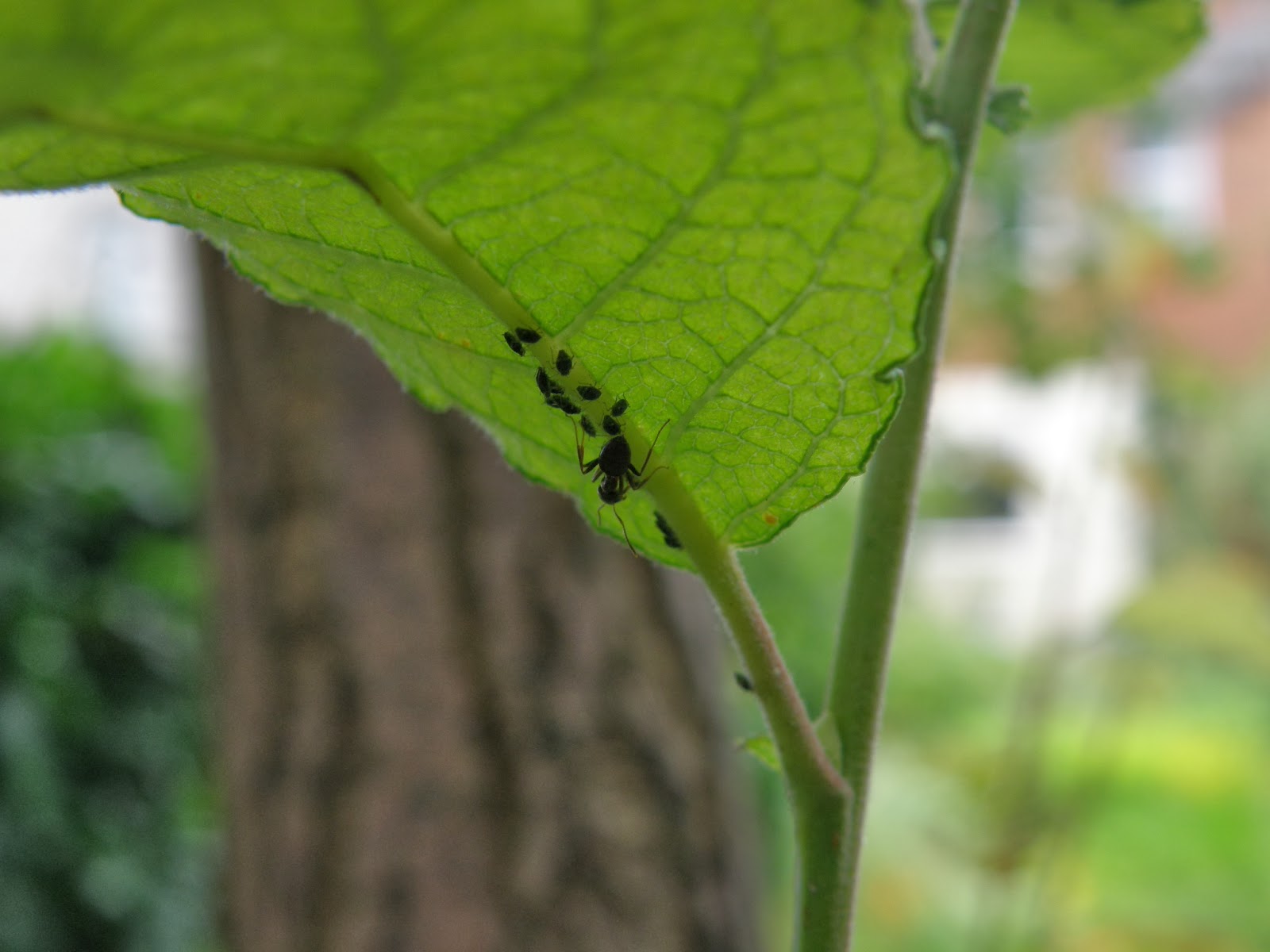
I have watched the ant milking her herd of blackfly, on the underside of the willow in my garden ...


 I and the One who is All-Seeing, All-Hearing, All-Knowing - all names included in the Beautiful 99. To me, these are moments of intimacy, wonder and delight. Sometimes I happen to have my camera with me at such moments and can capture something of the wonder, if only visually.I hope they give you a moment's delight too.

Friday, 7 March 2014

My Publications


 About my books and other things …
I’ve written quite a few books, e-liturgies and other things. If you Google the following titles and my name you will find them  at several online bookstores including the publishing companies’ own sites. You might not find them in bookshops, small publishing companies can’t always afford the discounts that the bookshops ask for and greatly appreciate your support and interest in taking the trouble to seek them out.


My most recent book, which I'm really pleased with, is 'Who do you say that I am? a book of reflections published by Kevin Mayhew for the season of Lent, which gave me an opportunity to explore the story and context of Jesus's life as described in Mark's Gospel, with a special focus on womens' voices, the environment and culture of the day. Jesus comes across as a bit of a rabbinic shaman, in touch with the land and full of Spirit. 

The blurb says ...

Annie ... offers here an insightful and enriching daily journey through Lent, using Mark’s Gospel as a guide book, with reflections, prayer and the opportunity for biblical exploration.

Exploring Lent as never before, Annie has tried to focus on the less obvious things, the little details, the ‘behind-the-scenes people’ and the way the land itself impacts on the Gospel story, to present a fresh way of looking at and appreciating the big picture of Jesus’ self-giving love. In particular, she has looked for the significance of the natural world and of the women who are very much present in the Gospel narratives, but whose voices and names are less often heard.


Scroll down for earlier publications, which are all ...

  • creation-loving, earth-spirituality friendly
  • rich in Biblical references and information
  • sensitive to womens' spirituality and essential equality
  • 'inclusive' in attitude regarding sexuality etc
  •  useful for personal reflection and group work, as well as use in creative liturgy and workshops
  •  inclusive or mainly inclusive regarding language about God - it's not all 'He'; God transcends and embraces all human gender distinctions.
  • make good gifts for people looking for something 'a bit out of the ordinary'.
  • written with a great deal of love and soul-searching.
If you are thinking of using my books I'd be glad to hear from you, find me on facebook or twitter (@HephzibahAnnie).


With Iona’s Wild Goose Publications

Reclaiming the Sealskin – Meditations in the Celtic Spirit (2002) At the time of blogging, on sale for just £6 which is a real bargain! The myth of the selkie, and reflections with pull-out meditation cards (illustrated by me), on 70 themes from nature from oak trees to squirrels, mountains to the moon. Popular with people seeking a closer affinity with the natural world, and with people who like nature-inspired meditation / oracle cards. The reflections include Biblical references.


Wild Goose Chase – exploring the spirituality of everyday life (2006) A companion book to dip into, with a wide range of reflections, prayers and even mini songs and liturgies, on themes of relationship, home, work, our bodies and the passing days, seasons and years. Popular for ‘pattern of life’ reflection, mindful living and just living prayerfully with the everyday.


The Healer’s Tree-  a Bible-based resource on ecology,peace and justice (2011): 28 reflections, fully illustrated (by me) in pen and ink, on themes from the lives of the Celtic saints, from folklore and Biblical accounts, on a mystical love theme drawn from the Song of Songs, on the call back to the garden: ‘Arise my love and come away …’  Ideal for house groups, lent groups etc

As well as the books …


With Kevin Mayhew Ltd


Hiding in God – reflecting on personal health concerns through prayer (2012): I kept a journal over the time I had surgery (a hysterectomy), and this was the result: a collection of prayers and reflections on different themes concerning physical and mental health, from sitting in a waiting room to coming round from an anaesthetic, struggling with self-esteem to facing an uncertain future … I’ve had some really moving responses to this book from people suffering serious illness, finding it a helpful companion book in time of illness - or illness of a loved one.


 Rejoice with Me – Hope for Lost Sheep (2013) I use the theme of the lost sheep to explore feelings of lostness and exclusion from God or from the church and how we can rediscover love no matter how lost or excluded we think we are. Ideal for personal reflection and self-development, also for church self-identity discussion, spiritual accompaniment and group work

And hopefully more on the way …

Thanks for your interest,
Peace and blessings,
Annie Heppenstall x