Thursday, 13 March 2014

Need an Inclusive Wedding Ceremony? The Blessed Path

near Knighton, Welsh borders

Thinking of getting married, or know a couple who are making plans? You might like the wedding ceremony I wrote last year, 'The Blessed Path', which is available here as a download from Wild Goose publications, (currently at £3), on the theme of 'journey'.

The blurb for the download says:

What has been the journey that brought you to this point? The Blessed Path is a creative and flexible marriage/partnership ceremony exploring the theme of life-journeys and the commitment a couple make to walk together along the path, 'on rough ground and on smooth. …'
A role in the ceremony is provided for the congregation / gathered community as well the the service leader and the couple themselves. The download includes a section of ceremony planning guidance, with suggested hymns and readings and other points to consider.'

'The Blessed Path' is included in a list of liturgies which meet appropriate criteria of the Church of Scotland's 'Theological Comission on Same-Sex Relationships and the Ministry' May 2013 (footnotes p.60), so if you are looking for an approved ceremony from a Christian faith perspective have a look!


Tuesday, 11 March 2014

Small Wonder

For a long time, I have been drawn to the 99 Beautiful Names of God, brought to us by Islam, the religion of surrender to God. One name in particular gives me great delight: Al Musawwir, the fashioner of intricate details, patterns and beautiful colours.

feather on grass in spring

Appreciation of the natural world, especially living in a city, often seems to be about noticing tiny things. I love the thought that I alone have witnessed a ladybird emerging from its chrysalis,

emerging ladybird, currant bush, summer

or I alone have spotted where a tiny spider is lurking,


spider's lair, canalside, autumn

 I have noticed the last elderberry on its red stalk, and the divisions of the twigs, and I have seen my shadowy reflection in its surface.

solitary elderberry, a park in Kings Heath, winter


I have noticed the ripples hidden under the bark, on an old sycamore tree ...


and the light shining through a glossy new leaf ...


a droplet of water, just before it falls ...


and all the potential of new growth, wrapped up waiting to emerge ...


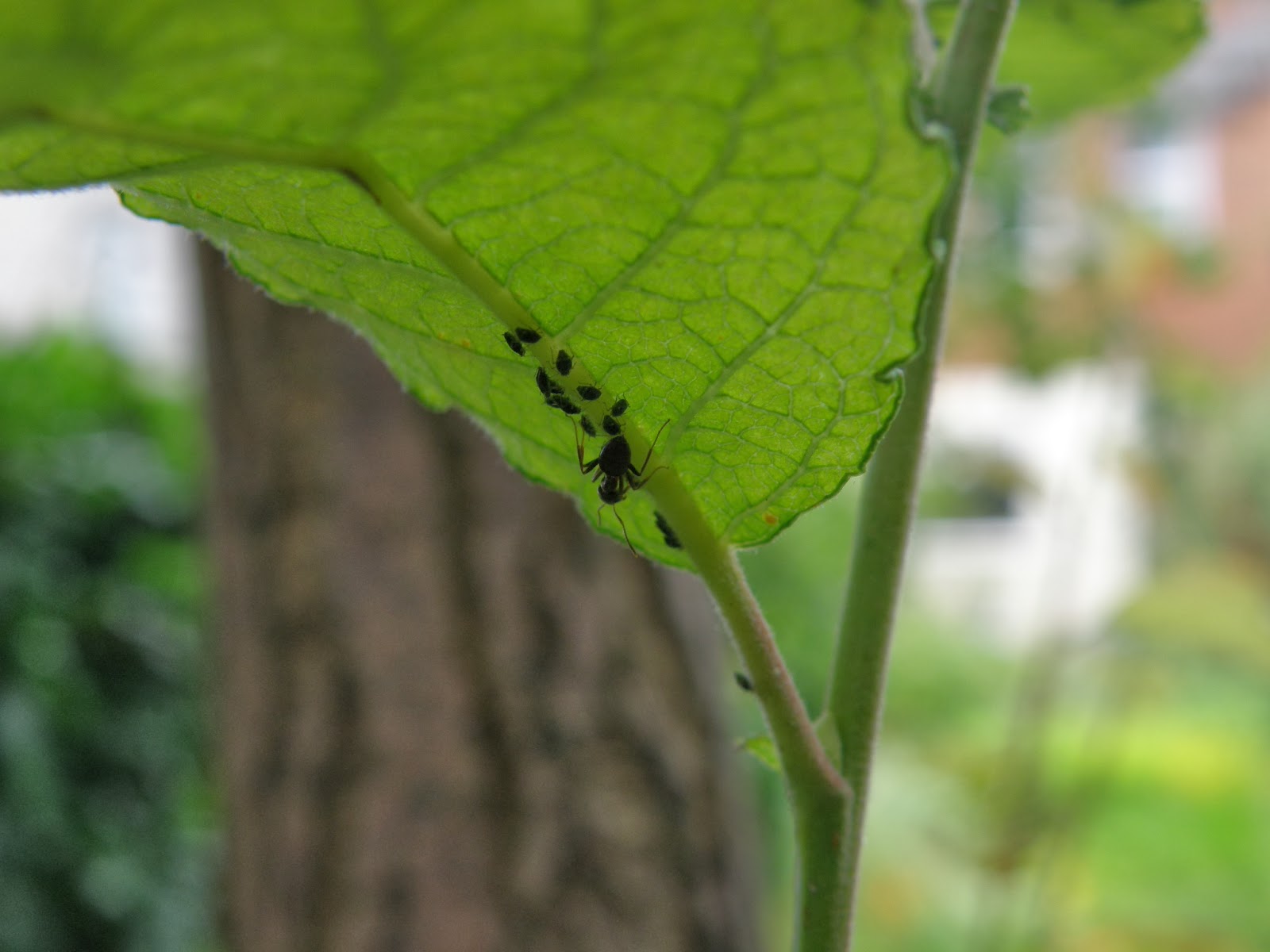
I have watched the ant milking her herd of blackfly, on the underside of the willow in my garden ...


 I and the One who is All-Seeing, All-Hearing, All-Knowing - all names included in the Beautiful 99. To me, these are moments of intimacy, wonder and delight. Sometimes I happen to have my camera with me at such moments and can capture something of the wonder, if only visually.I hope they give you a moment's delight too.

Friday, 7 March 2014

My Publications


 About my books and other things …
I’ve written quite a few books, e-liturgies and other things. If you Google the following titles and my name you will find them  at several online bookstores including the publishing companies’ own sites. You might not find them in bookshops, small publishing companies can’t always afford the discounts that the bookshops ask for and greatly appreciate your support and interest in taking the trouble to seek them out.


My most recent book, which I'm really pleased with, is 'Who do you say that I am? a book of reflections published by Kevin Mayhew for the season of Lent, which gave me an opportunity to explore the story and context of Jesus's life as described in Mark's Gospel, with a special focus on womens' voices, the environment and culture of the day. Jesus comes across as a bit of a rabbinic shaman, in touch with the land and full of Spirit. 

The blurb says ...

Annie ... offers here an insightful and enriching daily journey through Lent, using Mark’s Gospel as a guide book, with reflections, prayer and the opportunity for biblical exploration.

Exploring Lent as never before, Annie has tried to focus on the less obvious things, the little details, the ‘behind-the-scenes people’ and the way the land itself impacts on the Gospel story, to present a fresh way of looking at and appreciating the big picture of Jesus’ self-giving love. In particular, she has looked for the significance of the natural world and of the women who are very much present in the Gospel narratives, but whose voices and names are less often heard.


Scroll down for earlier publications, which are all ...

  • creation-loving, earth-spirituality friendly
  • rich in Biblical references and information
  • sensitive to womens' spirituality and essential equality
  • 'inclusive' in attitude regarding sexuality etc
  •  useful for personal reflection and group work, as well as use in creative liturgy and workshops
  •  inclusive or mainly inclusive regarding language about God - it's not all 'He'; God transcends and embraces all human gender distinctions.
  • make good gifts for people looking for something 'a bit out of the ordinary'.
  • written with a great deal of love and soul-searching.
If you are thinking of using my books I'd be glad to hear from you, find me on facebook or twitter (@HephzibahAnnie).


With Iona’s Wild Goose Publications

Reclaiming the Sealskin – Meditations in the Celtic Spirit (2002) At the time of blogging, on sale for just £6 which is a real bargain! The myth of the selkie, and reflections with pull-out meditation cards (illustrated by me), on 70 themes from nature from oak trees to squirrels, mountains to the moon. Popular with people seeking a closer affinity with the natural world, and with people who like nature-inspired meditation / oracle cards. The reflections include Biblical references.


Wild Goose Chase – exploring the spirituality of everyday life (2006) A companion book to dip into, with a wide range of reflections, prayers and even mini songs and liturgies, on themes of relationship, home, work, our bodies and the passing days, seasons and years. Popular for ‘pattern of life’ reflection, mindful living and just living prayerfully with the everyday.


The Healer’s Tree-  a Bible-based resource on ecology,peace and justice (2011): 28 reflections, fully illustrated (by me) in pen and ink, on themes from the lives of the Celtic saints, from folklore and Biblical accounts, on a mystical love theme drawn from the Song of Songs, on the call back to the garden: ‘Arise my love and come away …’  Ideal for house groups, lent groups etc

As well as the books …


With Kevin Mayhew Ltd


Hiding in God – reflecting on personal health concerns through prayer (2012): I kept a journal over the time I had surgery (a hysterectomy), and this was the result: a collection of prayers and reflections on different themes concerning physical and mental health, from sitting in a waiting room to coming round from an anaesthetic, struggling with self-esteem to facing an uncertain future … I’ve had some really moving responses to this book from people suffering serious illness, finding it a helpful companion book in time of illness - or illness of a loved one.


 Rejoice with Me – Hope for Lost Sheep (2013) I use the theme of the lost sheep to explore feelings of lostness and exclusion from God or from the church and how we can rediscover love no matter how lost or excluded we think we are. Ideal for personal reflection and self-development, also for church self-identity discussion, spiritual accompaniment and group work

And hopefully more on the way …

Thanks for your interest,
Peace and blessings,
Annie Heppenstall x

Sunday, 2 March 2014

St Non's Day 2nd March

near the ruins of St Non's chapel

Up on these cliffs, a woman gave birth alone in a storm. As a young woman she had entrusted herself to a community that somehow didn't manage to protect her from rape by a local wealthy and powerful visitor. Pregnant, she found herself excluded from the same community. During labour she leaned for support against a rock which bears her handprint to to this day, and although the storm raged, around her, a ray of sunshine comforted her. Where she gave birth, a spring appeared. Where humans let her down, God, through nature, responded to her with kindness.

the handprint stone?

The story of Non, a 'Celtic' Christian nun from Pembrokeshire, warns those of us who enjoy a 'Celtic' flavour to spirituality, away from romanticising the past. Non's son is David, who became patron saint of Wales. David is widely celebrated, his mother less so. But David became who he was through Non's single-parenting. When he reached a suitable age she had him admitted to a monastic school where he learned his faith. She then returned to her own vocation and returned to monastic life herself, travelling as far as Brittany to establish communities of her own.


St Non's chapel


 St Non is  celebrated in a stained glass window from the chapel at the site, the lower panel illustrating her journey to Brittany - with David. (Somehow, the romanticism has crept back in.)
Behind the figure of Non is what looks like a railway tunnel. This is the stonework built up around the spring which became her holy well.


 The housing of the spring is just large enough for a person to crouch inside, should they wish to. Pilgrims used to come here for healing, to douse themselves in the cold water. Many came not over the clifftops, but by boat, mooring at a nearby cove where the rocks are the colour of blood ... an earth reminder of birthing, of endurance and sacrifice that is characteristic of Non's life.

a possible mooring place for pilgrims near St Non's holy well


I see in St Non, the story of a woman who defined her identity not by her suffering, but her sense of  self-worth as a person in relationship with God, despite everything life - and other people - threw at her. Because of this, somehow, she seems to have worked some alchemy with all the pain and betrayal she must surely have experienced, to become someone capable of leading and inspiring others - or you might say God worked the alchemy in her. Her story is important, we need to know that she suffered, as many suffer today, but we also need to know that her life experiences did not destroy her. In her own life she experienced renewal. That gives me hope that the same can be true today, for the many who live through ordeals of their own.

ruins of the old chapel at St Non's

Saturday, 22 February 2014

WHO DO YOU SAY THAT I AM? an 'attractive and challenging' Lent book

ripening grain, Northumbria, looking over towards Holy Island

I was very pleased to be asked to write a Lent book for 2014 by Kevin Mayhew. I decided almost immediately to anchor it on Mark's Gospel, which was the first gospel to be written and which portrays a very 'human' Jesus in a very real context. I wanted to open up some of the clues  to his real-life situation hidden in the text, at the same time expressing something of my perspective on him: a rather 'shamanic' Rabbi living at a very troubled time, who communed with the Divine alone at night on the hillsides or in the wilderness, and who talked often about the countryside he and his followers walked through, to illustrate his wisdom. I especially wanted to emphasise the women's voices in that walk from Galilee to Jerusalem, and to bring out Jesus's use of the grain cycle in his teaching, with respect to his own life, death and rising. We tend to associate Jesus's death with the lambs sacrificed at Passover time, but forget that Passover was and is also an agricultural festival of the Mediterranean spring barley harvest. The fields would have been full of ripening grain, soon to be reaped, as they made their way south.

I was also very pleased that the Church Times recently published a great review of 'Who do you say that I am?':

'Who Do You Say That I Am? is a sustained exploration of the identity of Jesus, largely based on daily passages from Mark. It particularly draws on the social geography of the Bible, sets Jesus in the context of contemporary Jewish teachers, and draws attention to less prominent actors in history, among them women. 
The author's comments are attractive and challenging, and quite often move away from the text into areas for wider reflection. Each day, Annie Heppenstall also supplies a short monologue in the voice of one of Jesus's followers. This offers an imaginative alternative in a more Ignatian register, as with Jesus's mother to Peter: "I've given up wishing he might build a home and get a job, so you offering to make him a shelter and expecting him to be grateful - don't you know him yet?" 
With its optional extra Bible reading this would not be a lightweight choice, but it would certainly reward those who follow its journey - with periodic diversions - towards Jerusalem.'
Philip Welsh, Church Times

So, if you haven't got your guide-book for Lent yet, want to get one for a friend, have never used Lent as a time to reflect on Jesus and the Easter story before, or see yourself as outside of Christianity but interested in a 'different' and earth-spirituality-friendly perspective, here is an 'insightful and enriching' (as the blurb says) opportunity to explore Lent 'as never before.' It's available widely on the internet, the publisher's link is here.


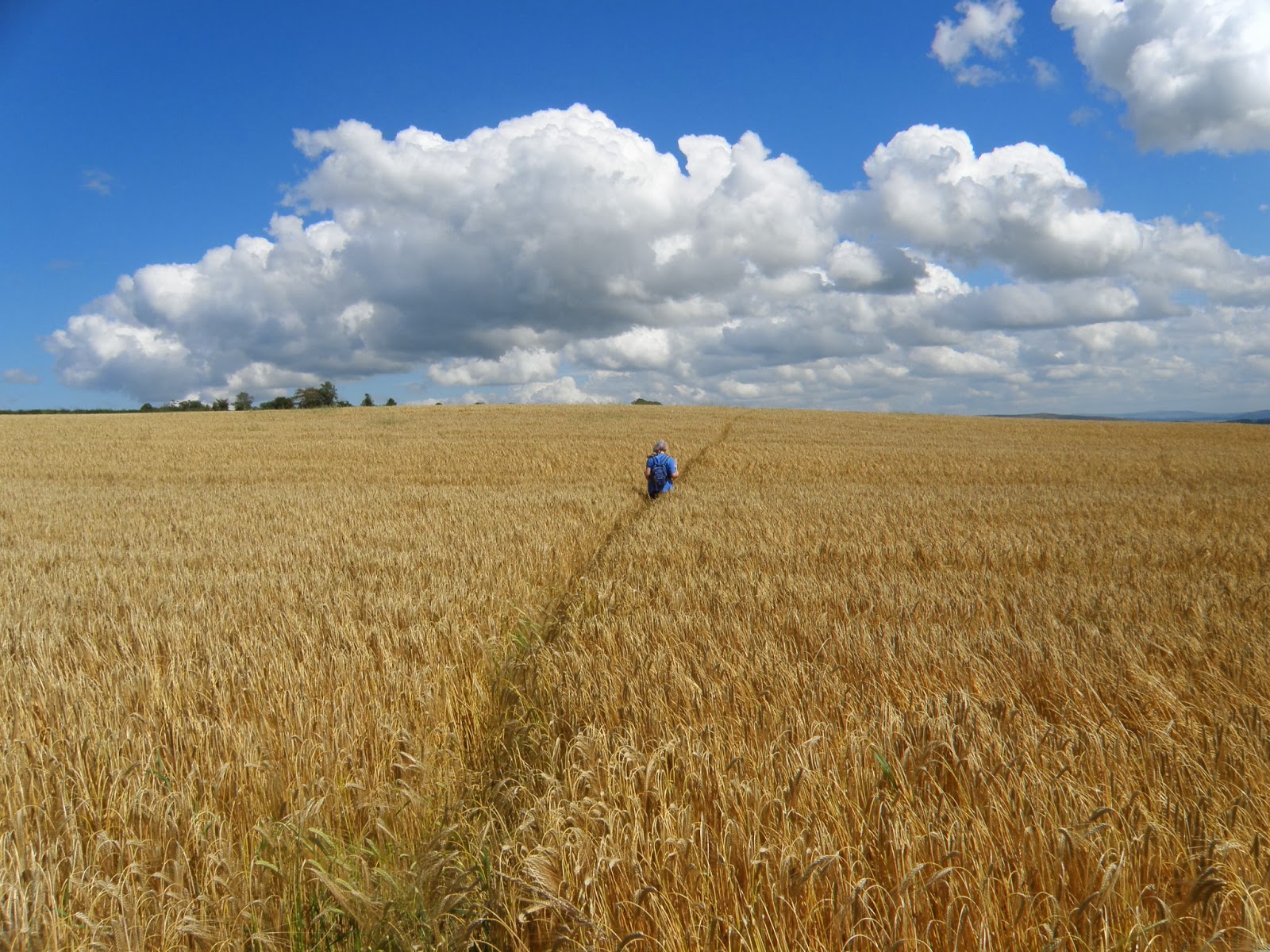
somewhere near Bishop's Castle (it's me!)

Unless a grain of wheat falls into the earth and dies, it remains just a single grain; but if it dies, it bears much fruit.
John 12:24 NRSV

Thursday, 16 January 2014

snow and ice

setting sun near river Cole


We are approaching what is, as a friend reminded me, on average, the coldest day of the year. As a family, we have also just celebrated my son's 18th birthday. The first time I remember taking him out, as a new baby, was a walk in the snow, all that time ago. I carried him in a sling and walked so, so carefully, down to the park behind our house.We haven't had any snow yet this year, and I haven't really missed it, but all the same, looking back over my photo collection, the snowy ones do have a certain magic.

frozen bucket of water with leaf

There's an old rune poem written in Anglo Saxon, that describes the ice:

Ice is so cold!  immeasurably slippery,
it glistens like glass, a precious jewel,
a floor wrought of frost, beautiful to behold.
 (my own loose translation)


Frost has a capacity for bringing out the jewel-like, helping us see differently, so we notice things that would otherwise be unremarkable:

such as dead cow parseley heads ...


A spider's web ...


an ivy flowerhead ...


so many intricate details.


As it happens, my nostalgic scroll through eighteen years of winter photos is timely. Tomorrow I am welcoming a group of students to our home and sharing something with them of living appreciatively amongst a predominantly Muslim neighbourhood. I'm going to share a little, as part of my presentation, about the 99 beautiful names of God (which I have blogged about previously in 99 Beautiful Names ...). One of my long-time favourites is 'Ya Musawwir', Oh Fashioner of Intricate Details ...' Through meditation on the name we are inspired to marvel at the intricacy of patterns,
A spiral of blackthorn


 the wonder of colours,


 the detail, the fascinating beauty all around us.


Ya Musawwir calls for us to stop and notice how incredible the natural world is. Stopping to notice the beauty is one of the 'meanings' of Isa, the Ice rune of the poem above. it's one of the things I've often found myself doing, in 18 years of bringing up a young person to adulthood. Isa is sometimes interpreted as a frustrating rune of standstill, as the ice makes travel difficult - and how we all want ot keep rushing about! But life is so fast paced these days - it's interesting that it's still nature, be it snow or carrying a precious new babe out into the world for the first time, that slows us down to stop in awe every now and then.

'When I look at your heavens, the work of your fingers, 
the moon and the stars that you have established,
what are human beings that you are mindful of them,
mortals that you care for them?'
Psalm 8:3-4


Sunday, 5 January 2014

The Name of Jesus

page from Lindisfarne Gospels showing Anglo Saxon translation
An exploration into Anglo Saxon over the last few years, revealed a surprising little gem: the name of Jesus got translated by meaning rather than by an approximation of phonetic values. So instead of something that sounds a bit like 'Jesu' or 'Yesou' or 'Yeshua' or 'Joshua', as we get so often in translations around the world, Anglo Saxon departs completely from trying to replicate the sound, and gives 'Haeland'. (The 'a' and 'e' should be stuck together in a dipthong pronounced 'a' as in 'cat' but I can't work out how to do that on this blog site). Haeland means healer and thus rescuer from harm, a save-er in the sense that a firefighter, a surgeon or a lifeguard might be seen as a save-er. In the Gospels, Jesus is normally described doing such 'middle-earth' works, although the accounts may take on a metaphorical spiritual dimension for the reader, such as when Peter tries to walk on water, sinks, and cries out 'save me!'. (Matthew 14:30)

The Harrowing of Hell from the Melisende Psalter
For some with a concern for spiritual affairs beyong this middle-earth as Anglo Saxons called it, the concept of save-er, one who saves another from harm, becomes saviour, with a more spiritual connotation of survival in a blessed state beyond this life. The Christian concept of 'salvation' emerges gradually, it is not fully formed in the writings of the New Testament and has different emphasis in different periods of church history. In Anglo Saxon Christian literature, for example, we find an account of Christ's harrowing of hell: he courageously rescues departed souls by fetching them out of their shadow-world of joylessness and bringing them to heaven.

Haeland is a statement of belief: Jesus exists in these Anglo Saxon translations as 'the one who heals-saves'. This is close to how Jesus's own Jewish contemporaries would have encountered the meaning of his name, but not quite the same. The name of Jesus in Hebrew was at the time a common name and made up of Yah and shua. Yah is a shortened form of the holy name that was not to be spoken, (Exodus 3:14) and refers to God as revealed to Abraham, Hagar, Moses, Miriam and other ancient founders of the faith: God Most High, God who made heaven and earth. Shua means something very like the healing, helping work of Haeland. 'God is our help', or 'God rescues', or 'God saves', are possible translations. Jesus's name is a statement about God - the God Jesus asked people to devote themselves to. The Anglo Saxon translator works a subtle sleight of hand and attributes all helping work to Jesus himself, not the Deity of Hebrew scripture. Some might say these are one and the same entity, but many would argue that it's more complicated than that.

We are often unwitting hostages to the interpretations of translators.This brings me to an interesting book I read recently, 'A Native American Theology', by Clara Kidwell, Homer Noley and George 'Tink' Tinker. The authors talk about a passage that has been used oppressively by white colonisers, to frighten indigenous people into thinking they have no option but to convert. The passage in question is one quoted quite recently to me by an evangelically minded friend, as the reason why, in all conscience, he finds it very difficult to make room for other faiths. I wondered whether he had read the whole passage in the original Greek at all, as it makes a difference. Here's an English translation of the key verses:

let it be known to all of you, and to all the people of Israel, that this man is standing before you in good health by the name of Jesus Christ of Nazareth ... There is salvation in no one else, for there is no other name under heaven given among mortals by which we must be saved.’ 
Acts 4:10-12 NRSV

Fragment of Greek papyrus
That sounds pretty authoritative, doesn't it.  But the Greek word sozo, here rendered 'salvation' and 'saved', is in the same episode, which involves a man's lame leg being healed, understood to mean physical healing, restoration to wholeness. Suddenly the translator jumps from bodily wellbeing to spiritual salvation, with, it seems, little justification except that he or she is reading back into the text a theology of Christian salvation that was not fully developed at that time. So first, this is primarily an account about a healing controversy and a dispute about the fact that it happened on a Sabbath day. 'Yes but it's still the name of Jesus that effects the cure,' you might say. It's still 'by no other name ...' Well, OK, but what does the name of Jesus mean? As I said above, it points to God. It means 'God saves / helps / rescues.' Depending on your outlook, that may or may not be Jesus, and to many but not all Christians that's exactly what it does mean -  but it does take the wind out of the sails a bit. The passage becomes less oppressive, easier for a person of another faith or spiritual path to find room for manoeuvre. As the authors of A Native American Theology put it,

'So it has always been in our ceremonies and among our healing specialists since time immemorial. The power to heal always comes from the spiritual energy of Wakonda, even when particular individuals have been identified as the vehicles through whom certain kinds of healing or help can be facilitated. Yet the missionaries have used this story to proclaim to us a self-serving untruth, that God has only spoken to them and only communicated through Jesus.'
p.75

I know a lot of Christians do hold onto this passage is Acts 4:10-12 as a reason for exclusivism - even the ground of their faith, and I appreciate I will press buttons by flagging it up as a misleading, even oppressive text, in the way it is usually interpreted. But it's a wobbly rock to stand on as a foundation for faith. The text is not as clear as translators would like us to believe and indigenous peoples are not alone in having been persuaded out of fear, rather than making a choice based on love and personal calling. Personally, and it's been said many times before, I think it's time for Christians to look again at the history of colonialism, conquest and coercive conversion in the name of Jesus and look again at texts like this, and just pause, just listen to what is really being said, what following Jesus is really about, and what we really mean, how we can  say what we mean without any violence. I don't think most Christians wish to be oppressive or oppressed, but sometimes it happens anyway.

(the photos in this post are of pages in my 'Bible Manuscripts' British Library address book with thanks)